
If you’re unhappy with the shape of your nose, you’ve probably come across two popular options: nose filler and rhinoplasty.
Both can improve the appearance of your nose, but they work in very different ways. One is non-surgical and temporary, while the other is surgical and permanent.
So how do you know which option is right for you?
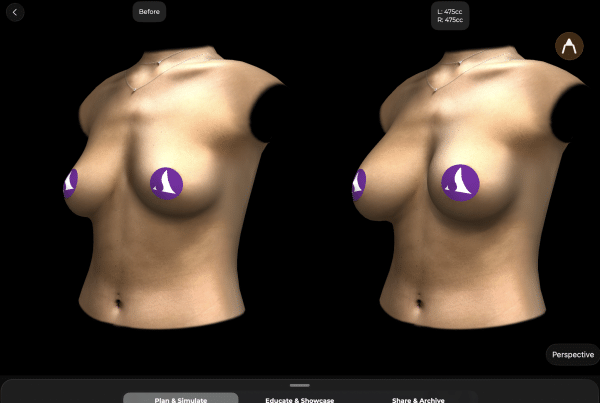
The good news is that today with Arbrea Face and myArbrea, practitioners can create realistic treatment simulations during consultations, while patients can review and compare their potential results afterward from their own devices.
What Is a Nose Filler?
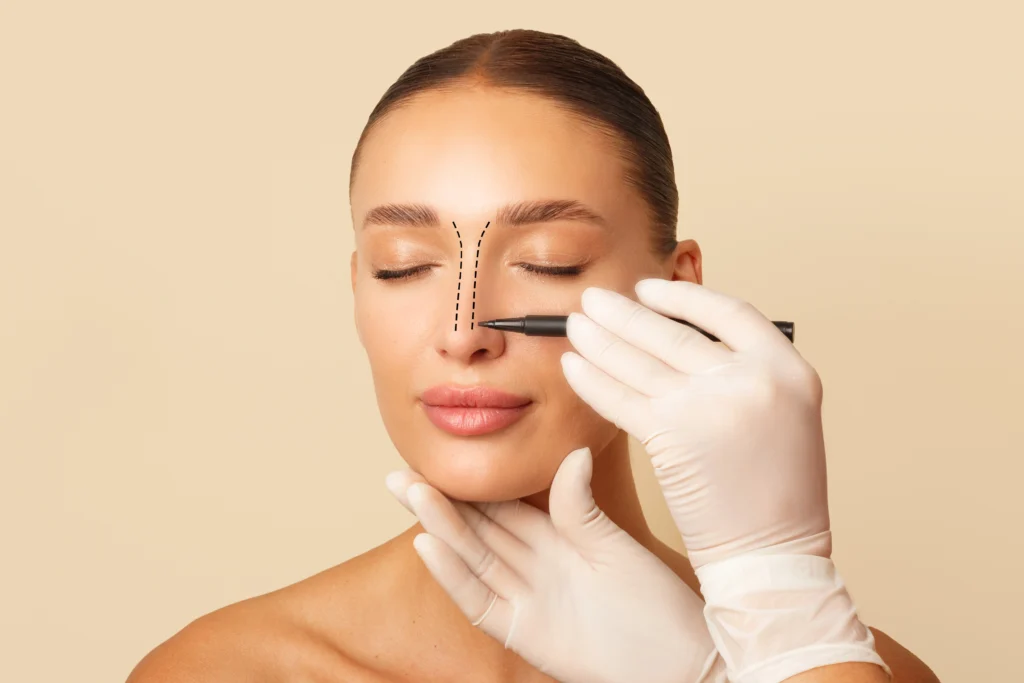
A nose filler, often called a liquid rhinoplasty, uses dermal fillers to reshape certain areas of the nose without surgery.
It can be used to:
- Smooth a dorsal hump
- Improve symmetry
- Lift the nasal tip
- Create a straighter nose profile
- Correct minor contour irregularities
Results are visible immediately and typically last between 12 and 24 months, depending on the filler used.
Pros of Nose Filler
- No surgery
- Minimal downtime
- Immediate results
- Reversible in many cases
- Lower upfront cost
What Is Rhinoplasty?
Rhinoplasty is a surgical procedure that permanently changes the structure of the nose.
It can:
- Reduce nose size
- Refine the tip
- Remove a hump
- Correct asymmetry
- Improve nasal function and breathing
- Address structural concerns
Because rhinoplasty changes bone and cartilage, it offers possibilities that fillers simply cannot achieve.
Pros of Rhinoplasty
- Permanent results
- Can reduce nose size
- Can improve breathing
- More dramatic transformation possible
- One-time procedure
Nose Filler vs. Rhinoplasty: Which One Should You Choose?
The best choice depends on your goals.
Choose nose filler if you:
- Want subtle improvements
- Prefer a non-surgical option
- Want to test a new look before surgery
- Are looking for minimal downtime
Choose rhinoplasty if you:
- Want permanent results
- Need structural changes
- Want to make your nose smaller
- Have breathing concerns
Can AI Show You Both Options Before Treatment?
Yes. Modern AI simulation technology allows practitioners to create realistic visualizations of both filler treatments and rhinoplasty outcomes during the consultation process.
With Arbrea Face, these simulations can be generated in real time during the consultation. Through myArbrea, patients can then access their simulations later, revisit different treatment options, compare outcomes, and make decisions with greater confidence. Rather than relying solely on verbal explanations, patients gain a clearer understanding of what each treatment approach may achieve.
How Arbrea AI Helps Patients Compare Nose Filler and Rhinoplasty
Choosing between nose filler and rhinoplasty can be challenging, especially when patients struggle to visualize the differences between temporary and permanent changes.
Arbrea Face helps practitioners generate realistic AI-powered simulations in seconds, allowing patients to see potential outcomes before committing to treatment.
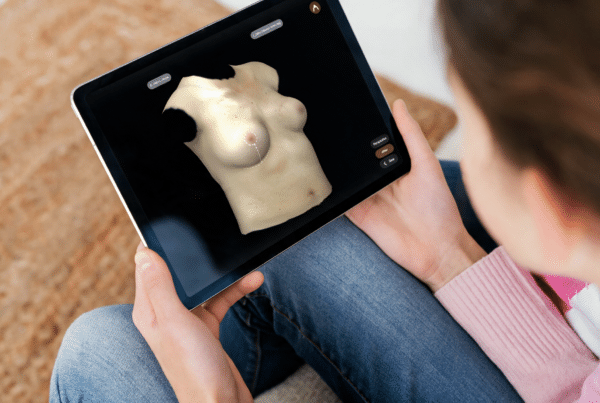
The experience continues with myArbrea, a patient-facing platform that gives users access to their simulations beyond the consultation room. Patients can revisit their results, compare treatment options, share simulations with family members, and return to follow-up consultations feeling more informed and prepared.
Together, Arbrea Face and myArbrea create a more transparent consultation process, helping practitioners improve communication while empowering patients to make confident treatment decisions.
Final Thoughts
There is no universal answer to whether nose filler or rhinoplasty is better. The right choice depends on your anatomy, goals, budget, and desired level of change. What matters most is understanding your options, and being able to visualize them before making a decision. With modern AI simulation technology, patients can explore different possibilities with greater confidence and clarity than ever before.
Frequently asked questions
Is nose filler safer than rhinoplasty?
Both procedures have risks and benefits. Nose filler is non-surgical but still requires an experienced injector due to the complex anatomy of the nose. Rhinoplasty is surgery and carries surgical risks but provides permanent structural correction.
Can nose filler replace rhinoplasty?
Not always. Fillers can improve shape and symmetry but cannot reduce the size of the nose or address structural breathing issues.
How long do nose fillers last?
Most nose fillers last between 12 and 24 months, depending on the product and individual factors.
Can Arbrea Face accurately simulate rhinoplasty results?
Arbrea Face uses advanced AI technology to create realistic rhinoplasty simulations that help patients visualize potential outcomes before surgery. By generating personalized previews based on the patient’s unique facial anatomy, Arbrea enhances consultations and enables clearer communication between surgeon and patient.
In addition, myArbrea allows patients to continue exploring their simulated results beyond the clinic, giving them the opportunity to review treatment options, compare potential outcomes, and feel more confident in their decisions from the comfort of their own home.
While no simulation can guarantee an exact surgical result, Arbrea provides highly realistic visual references that help align expectations, improve patient understanding, and support more informed treatment decisions throughout the aesthetic journey.
How does Arbrea assist with planning facial surgeries?
Arbrea provides AI-based facial analysis, offering data on proportions, symmetry, angles, and volume. This allows you to plan rhinoplasty or facial harmonization procedures with greater precision and communicate those plans more clearly with your patient.
What is myArbrea?
myArbrea formerly myArbrea is the patient app. It allows patients to experience 3D simulations of their desired results in the privacy of their own home, using just an iPhone
Can my clinic brand the patient app myArbrea?
Yes. Your clinic’s app can be branded with your logo and linked with your booking system, making it a seamless extension of your practice.
Is patient data safe?
For privacy reasons, the app can run offline and does not upload any personal data, images, or videos of any kind unless explicitly shared by the user.





 English
  Portuguese
  Italian
  Spanish
  German
  Arabic
  French
  Korean
  Albanian
  Thai
Thai  Hindi
Hindi  Vietnamese
  Japanese