

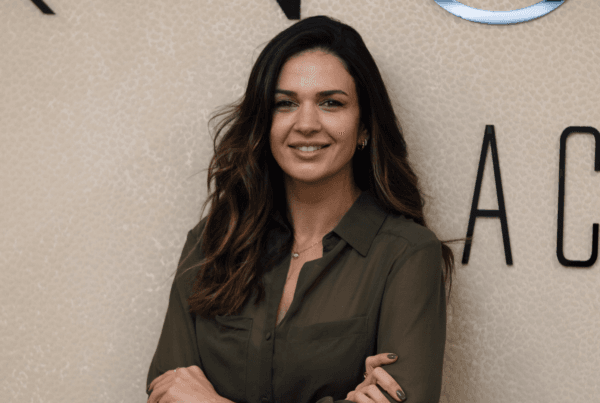
This episode of Arbrea Talks, we are speaking with Dr. Pellegatta, a plastic surgeon who works in Akademikliniken, a leading clinic in the Nordic Aesthetic Medical field. His main specialties are breast procedures, abdominoplasty, and mommy makeovers. However, today we will be focusing on the anatomy of a consultation that converts.
Transforming Consultations into Patient-Centered Journeys
The anatomy of a consultation that converts. The main topic behind this article is to transform the consultation. I mean to not focus on being so technical. To speak the patient’s language, not the doctor’s. This makes it an experience guiding the patients toward their aesthetic journey. And I’m referring to a journey that starts before the consultation and carries on after the consultation too. All in all, it’s a whole process that involves everything I would say to the patient.
More Than Surgery: The True Value of Consultation
For me, mastering consultations is a must. I would add that it’s almost as equally important as the surgery itself. And for certain aspects it’s even more important. Why? Because the consultation is a moment when you and your patient get to know one another. It helps to build trust, truly understand their wishes, and help them achieve what they want.
Therefore, a consultation doesn’t mean that a patient walks in with something in their mind. A desire they have, and we just do it. It’s a transformative process. More important than the surgery itself. All surgeons love to do surgery, and honestly, that’s great. To be able to perform such a delicate and important aspect of the patient’s aesthetic journey.
However, what’s more important is to truly listen and understand what our patients want. Not going to war with them and imposing our vision and wishes.
Cutting Through the Noise: Guiding Patients with Clarity
Another thing that has made the patient’s journey towards their ideal look more complex is the amount of information out there. This has contributed to a lot of confusion in patients. Which has all translated to a lot of noise around what we do and our job. So we now face another challenge. To cut through the noise and give clarity to our patients. In a few words, to be their guide in their aesthetic journey.
Because nowadays, you can read everything on the internet. There are a lot of opinions, from the type of implant you should have to the way a certain surgery should be done. The problem is that this information is heavily biased. Maybe they are quality opinions, but they don’t apply to the specific case of the patient. There are many times a patient wants something that doesn’t make sense from an anatomical perspective. It’s just not doable for them.
This is the moment we step in and gently guide them. Explain what is realistically doable and meet their demands and wishes as much as we can and is possible too.
From Old-School Consultations to Guided Journeys
We share the same belief. The one that every patient is unique. I know that Arbrea has this core belief, and you try to share it with the community of plastic surgeons. I know that some of my colleagues are skeptical when it comes to upgrades. Because they want the consultation to be a moment where they hear the patient, not to manage the patient’s expectations.
However, I think this concept is kinda old. I think that the consultation is a great moment to start a journey with our patients. To guide them in the right direction. Our role is not to state it will be like this and no other way. That way of thinking is really old school. Also, I believe that making the patient understand what is truly doable gives them a whole other sensation. Let’s say combining 3D simulations with AI can give the patient a full experience. They can even experience their dream. And realize if it’s something they want, or understand that they want something slightly different as long as it’s doable.
What I mean is we should not patronize our patients but guide them and walk together towards the same goal. And most importantly, to avoid imposing our vision on the patient.
I need to add that usually patients go to plastic surgeons with whom they share the same vision. My signature look is natural and nice and doesn’t look fake. Normally patients that come to me want these results. And of course in other situations, plastic surgeons have a different taste, and they attract another kind of patient. It’s super good, because everyone is satisfied in the end.
How I Structure Every Consultation in Three Steps for Maximum Clarity
I actually cure and refine every detail of the consultation. Also, I divide the consultation into 3 steps. I can do this because I am very lucky. I work for an academic clinic, and we have a process managed carefully through different stages. So when the patient comes to me, I know what their health state looks like. Since I know everything by then, I can jump directly into the important parts of the consultation.
The first step of the consultation, which I consider the core of the consultation too, is their wishes and desires.
The patient comes to, and my first question after greeting them is, ‘What are your wishes and desires?’ Of course these wishes and desires can be anything. Something simple. 3 to 4 phrases, like ‘I want a natural breast, not too big, not too small.’ Or something really elaborate. Like, I have been looking around, and here you have 15 pics of girls in bikinis that I like. In this picture, I like this, or in this picture is something similar to what I want to achieve with my new look. The cleavage here looks nice, but I don’t want to see the border of the implant. To guide them, I show results from private surgeries and ask what they like and what they don’t like. This helps me to create a rough idea of what they want.
For example, an anatomical round implant, if possible, to get a more projected implant. One that sticks out a little bit more from the body. Or if they want a flatter implant or something like back to the basics, I would take their measurements, and then suggest.
Step number two is what I call the “wow effect,” which means that in this I will definitely make them feel this effect.
But what does that mean? So normally I combine 3D and AI simulation with the sizers. So at the same time they feel them on themselves and also have somebody to guide them on how they’ll look, how their new features will look, and what the 3D simulation looks like from all angles. Also, they can look at themselves in front of the mirror with the sizers, feel the weight of the implant, and feel how the implant might feel with clothes on.
Meanwhile, step number three is the discussion of what will happen after the surgery.
I call them practicalities, meaning the practical part of this aesthetic journey. So they see everything and decide to go ahead. Then, we decide on the perfect implant for them. My obsession is to find the perfect implant for every patient I have.
But as you guys know, we can always play around. Try on slightly bigger or smaller. It’s not a big difference, but we do it. Especially in certain cases of breasts. You need to be more specific, but you can still try several options.
”Our role is not to impose our vision but to guide patients and walk together toward the same goal.
Dr. Tommaso Pellegatta

The Shift That Changed My Results (and My Patients’ Experience)
Since I mastered these three steps, my results changed obviously. And in the beginning there was like a before and after I had the consultation. So when I first started, my consultations were really technical. I wouldn’t use medical jargon, but still they felt technical. And those types of consultations really bored the patients out of their minds. From our perspective, the doctor’s, you think that you are being thorough, showing that they’ll be in competent hands. However, your patients don’t understand a lot of what you’re trying to say, they get bored because, at the end of the day, they don’t care how you do it. They want to get their wishes and desires completed. That’s the thing they are truly after.
So naturally, when I changed my consultation process and structured it, I got a better conversion rate. However, the most important thing to me was to serve my patients in a better way. Because my obsession is how to make my patients happy and better serve them? That’s why I keep changing and improving what I’m doing in every part of their aesthetic journey. Consultation process, operation, post-op care. Everything, really.
Excellence Through a Patient-Centered Approach
People always ask me if there was a defining moment that pushed me to change. Not really. I have always applied a patient-centered approach. The most important thing to me is that my patients are happy and satisfied with what I offer to them. Of course this pushes you to be excellent, because the only way to have happy patients is to truly care for them. And normally doing more for them than anyone else in terms of results’ perspective. At the end of the day, bad talk from patients towards your practice or person does count. Also from a care perspective too.
No one is perfect, and at a certain point a patient might have a complication or reoperation. It’s not your fault or your patient’s. Because we have to remember we work on people, not machines. We cannot just pop the hood and repair it like we are working on cars. We work on bodies, and bodies react in a different way. We can predict up to 98% of what will happen, but that unstable 2% is not under our control. That’s why it is our duty to support our patients and reassure them that things will go right. Also that you will do everything you can to achieve their wishes and desires.
Why Arbrea Suite Changed the Way I Guide Patients
It has been almost two years since I incorporated Arbrea Suite into my practice. And it has had a revolutionary approach to my consultation process. Why? In this way the whole consultation is done in my room and allows me to project what it will look like for them. And also, I can make them see directly what they want. Let’s say if one of my patients says, “I want 350 ccs for an implant because my friend has the same one,” I just show them how they’ll look with it. In this way I explain visually why it won’t look good for them in just one click.
Then with Arbrea, I show them what they need. It’s super good to show them what’s possible and what’s not, to bust different myths, or to confirm what actually works for them, a.k.a. looks good on them.
Arbrea Suite, A User-Friendly Platform Backed by Real Support
I can admit that using Arbrea’s platform is really intuitive and simple. I have used other 3D tech and tools. And the main difference for me is that with Arbrea I can simulate everything. Everything is at my fingertips. Super easy. The interface is user-friendly, and you can learn how to use it in a very short time. Even if you are not tech-savvy, the support you give is amazing.
I have a great story to illustrate my point above. When I was doing my first simulations, I was not impressed at all with the quality. However, the issue was with the lighting in the pictures, not with the software itself. After talking to one of your sales team members, Sara, and sharing my frustration, I found out how to do it properly. I told her, “Yeah, when I try to show it directly to the patient, the quality is not the best.” Sara told me the pics you are taking are not the best to put in the software. Then she explained how to take the pictures with the right lighting. From that moment the difference was like day and night.
And it’s also a matter of practice. You need to practice at least 3 to 4 cases before you get the idea of how to properly use it. 3 to 4 cases is acceptable compared to the 1,000 cases I’ve heard for other tools. I understand that your goal is for us to have an advanced solution, but that doesn’t have an absurd learning curve. Otherwise, we would never even consider it. Despite the benefits.
From Reviews to Simulations: The New Patient Discovery Process
Now there is another important part I’d like to talk about. And that is the journey of the patient before coming to the consultation. The discovery process. This matters a lot. Although we don’t actually see how it will impact the consultation and then surgery, it carries a lot of important weight.
They go online and check all the Google reviews of the doctor. They check the before and after pics of previous cases. They ask around other patients, either through forums or communities, which doctor operated on them and how their journey was. That helps them create a rough idea.
Sometimes they come with suggestions for simulations or ideas that help the consultation. This is an evolution in itself. Especially from a patient coming with pics of another girl in a bikini that doesn’t help me one bit. Or an image of herself generated by ChatGPT, Sora, etc.
To wrap it up, patients when they come your way know about you, your clinic, your records, and your happy patients. Then they come to you and see the simulation part too.
Conclusion
In this episode with Dr. Pellegatta, we saw that consultations are no longer just the prelude to surgery. They are the heart of the entire aesthetic journey. By shifting from technical, doctor-centered conversations to patient-centered experiences, we create not only clarity and trust but also genuine collaboration.
With tools like Arbrea Suite, we can visualize outcomes, dispel myths, and guide patients with transparency. More importantly, we elevate the consultation into a transformative process where patients feel heard, supported, and empowered to make informed decisions.
At the end of the day, surgery may deliver the physical change, but it is the consultation that defines the relationship, sets the expectations, and lays the foundation for lasting satisfaction. That’s why refining consultations is not just about conversions but about building journeys where patients and surgeons walk together toward the same goal: safe, natural, and truly fulfilling results.
And to be able to do that, you need Arbrea Suite in your practice. Start using it today!

About Dr. Tommaso Pellegatta
Dr. Tommaso Pellegatta is a distinguished plastic surgeon with extensive experience in aesthetic and reconstructive procedures. Based in Stockholm at Akademikliniken, he specializes in breast surgery, abdominoplasty, and combination procedures such as mommy makeovers, always focusing on natural and harmonious results. Co-founder of a widely used implant-selection app known as BAP, Dr. Pellegatta integrates cutting-edge technology into his practice to enhance precision and patient satisfaction. Known for his empathetic and patient-centered approach, he prioritizes building trust from the first consultation, ensuring that every treatment plan reflects the patient’s desires, proportions, and individuality. Fluent in Swedish, English, and Italian, he is also an active member of leading international plastic surgery associations and a regular contributor to scientific publications and masterclasses worldwide.




 EN
EN PT
PT IT
IT ES
ES DE
DE