


Before-and-after photos have been a key tool in aesthetic medicine for decades. They help set patient expectations and guide decisions. But times have changed. Relying only on static images may no longer be enough.
Endri Dibra, CEO of Arbrea Labs, says it clearly:
“After decades in computer vision and graphics, one thing has always been obvious to me: when people can see clearly, alignment happens faster.”
This isn’t just about marketing. It’s about better patient care.
How Visuals Affect Patient Satisfaction
Research shows that patient satisfaction is closely linked to managing expectations. When patients can clearly visualize results before surgery, they feel more comfortable. They also report higher satisfaction after the procedure.
Key findings from research:
- A review in The New England Journal of Medicine found that expectation management often matters more than the complexity of the surgery itself
- Studies in Annals of Surgery show that well-informed patients feel less anxious and more satisfied long-term
Visualization in aesthetic medicine isn’t just visual it’s psychological. We don’t see ourselves as flat photos. We see ourselves in motion, from different angles, in real space. Static images can’t replicate that. When patients can’t see clearly, they fill in the gaps with imagination and that’s where misaligned expectations begin.
Why Static Photos Fall Short
Before-and-after photography is useful. But it has real limitations:
- Lighting changes how contours look
- Camera angles affect perceived results
- Posture alters body shape
- Movement is missing
- Personal context is absent
Most importantly , those photos show someone else. Every patient has a unique body. Different tissue, different proportions, different structure. What looks great on one person may look completely different on another.
The biggest question patients have is: “What will this look like on me?” Static photos simply can’t answer that.
Other Industries Already Use 3D Visualization
Think about architecture. No serious buyer purchases a home based on flat drawings alone. Before anything is built, teams create:
- 3D models
- Digital renderings
- Virtual walkthroughs
This is standard practice even for a building. Yet in aesthetic medicine, where changes are made to the human body and are often permanent, many consultations still rely on photos of someone else. If we need visual clarity before designing a room, we need it even more before altering a person’s appearance.
The Shift: From Comparison to Personalization
Patients today are used to interactive visuals. They use AR filters, virtual try-ons, and real-time previews every day. They expect to see results before committing.
Aesthetic medicine hasn’t always kept up with this expectation. Many consultations still rely on static photo galleries. This gap creates uncertainty and uncertainty hurts satisfaction.
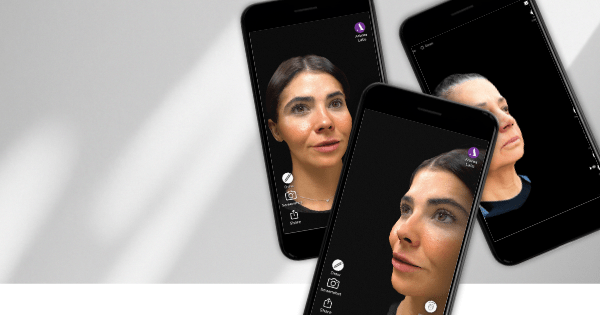
Arbrea Suite by Arbrea Labs was built to close this gap. It’s an AI-powered 3D and augmented reality platform made for aesthetic medicine. Here’s what it allows surgeons to do:
- Show simulations on the patient’s own body
- Demonstrate volume changes and contour adjustments
- Explore results from multiple angles
- Make the consultation a collaborative process
This shifts the experience from “look at someone else’s results” to “see what’s possible for you.
The Result: Clarity Builds Trust
When patients see 3D simulations based on their own anatomy, they:
- Understand how changes will look in proportion
- See results from multiple perspectives
- Feel more involved in the decision
- Enter surgery with realistic expectations
This doesn’t remove surgical risk. It doesn’t promise perfection. But it aligns expectations with reality.
Surgeons using 3D and AR tools report better consultations. Conversations become more focused. Patients feel more confident. Anxiety drops. Trust grows.
Patient satisfaction improves — not because surgery changes, but because communication does.
”I like to use this in consults
Dr. Kriti Mohan
to actually show patients
what they would look like

The Silent Phase Before First Contact
Equally important is the pre-patient journey the silent phase before a consultation even begins. Patients often evaluate clinics through online galleries long before booking an appointment. Static before-and-after imagery dominates this stage.
Extending visualization beyond the consultation room strengthens clarity earlier in the decision-making process. Through Lindapp, Arbrea enables secure, patient-specific 3D simulation experiences that can be accessed privately from home under the guidance of the treating clinic. This structured pre-consultation environment reduces uncertainty even before the first in-person discussion takes place, reinforcing transparency and professionalism from the outset. When clarity begins early, trust forms earlier. And when trust forms earlier, consultation becomes collaboration rather than persuasion.
What This Means for Patient Care
Replacing static imagery with personalized 3D visualization is not about abandoning tradition. It is about enhancing communication precision. Ethical care demands that individuals understand both possibilities and limitations before undergoing intervention. Visualization tools do not oversell outcomes; they contextualize them. They ground discussions in anatomical realism rather than generic comparison. In this sense, 3D and AR simulation is not merely a technological innovation. It is a clinical communication advancement.
The Future of Consultation Standards
As healthcare continues its shift toward personalization and transparency, reliance on static before-and-after photography as the primary visualization tool will increasingly appear incomplete. Patients no longer want reassurance alone. They want evidence they can interpret.
By transforming consultation into an interactive, AI-driven visualization ecosystem through Arbrea Suite and Lindapp, Arbrea Labs helps eliminate the ambiguity that static images leave behind. The result is not only stronger alignment but greater emotional confidence before surgery. Because patients do not fear transformation. They fear misinterpretation.
Conclusion
Static before-and-after photography once revolutionized aesthetic medicine. Today, it represents only a fraction of what patients require to feel confident in their decisions. In an era defined by personalization and technological sophistication, two-dimensional comparison cannot fully support three-dimensional change. By introducing anatomically accurate 3D and augmented reality visualization into the consultation process, Arbrea transforms abstract expectation into concrete understanding. This clarity strengthens trust, improves alignment, and enhances patient satisfaction.
As aesthetic medicine continues to evolve, the future of surgical confidence will depend not only on technical mastery, but on how precisely outcomes are communicated before intervention begins. When patients can see their potential future clearly, uncertainty diminishes. And when uncertainty diminishes, satisfaction follows.

About Dr. Kriti Mohan
Dr. Kriti Mohan is a board-certified plastic surgeon trained at one of the world’s premier medical centers, where she refined her expertise in cosmetic and reconstructive breast surgery. With a dedicated focus on aesthetic breast procedures, she combines advanced surgical precision with meticulous attention to detail. Known for her warm and reassuring bedside manner, Dr. Mohan is committed to delivering personalized, high-standard care tailored to each patient’s unique goals and expectations.





 EN
EN  PT
PT  IT
IT  ES
ES  DE
DE