


Artificial Intelligence. Augmented Reality. Virtual Reality. You see them every day being thrown around like a hot potato. Especially in your field. Being a plastic surgeon or aesthetic doctor nowadays means you need to be up-to-date on every development.
A lot of your colleagues might say they understand, but they don’t have the full grasp on them. And that’s okay. You can just take your time and read this piece, where we explain what they are and how Arbrea Labs helps your practice grow to the next level.
What are AI, AR, and VR?
Artificial Intelligence, or commonly referred to as AI, means computer systems that mimic human intelligence to perform different tasks. These tasks can be learning from data given to them, recognizing patterns, and making decisions. In aesthetic medicine, AI can analyze body features, simulate outcomes, or improve accuracy in surgical planning.
Augmented Reality, or commonly referred to as AR, serves to overlay digital information. We are talking about projecting images or 3D models onto the real world through a device’s camera. It doesn’t block out the real world but enhances it with useful visual elements.
Virtual Reality, or commonly referred to as VR, helps to immerse users in a fully digital environment, often through headsets. It creates simulated experiences that can be educational, therapeutic, or used for training purposes. However, it’s less common in everyday patient consultations due to its isolating nature.
What is AR in the Arbrea Suite?
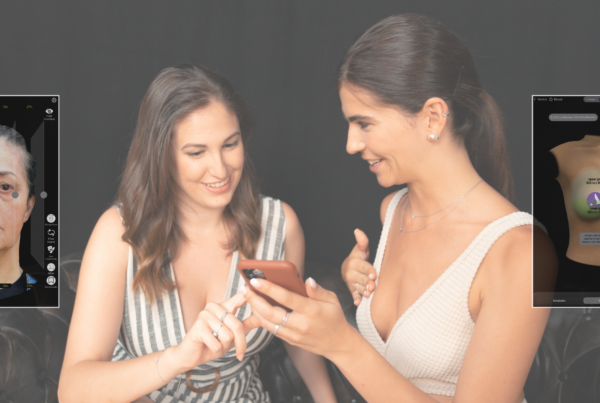
In the Arbrea Suite, AR is named as Images. And it helps to project a visual simulation of surgical outcomes directly onto a patient’s body in real time using an iPhone or iPad. The procedures vary from breast augmentation to facial treatments.
How does it work? Like this.
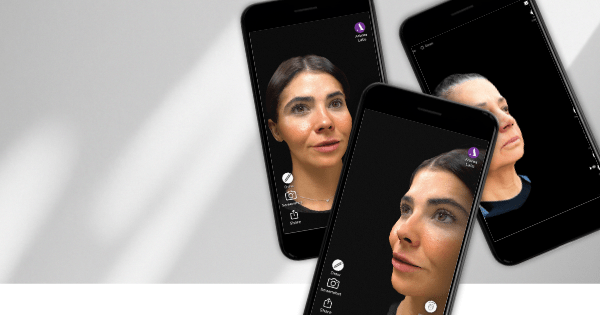
You will scan the patient using the iPhone’s or iPad’s camera. Our AI will create a realistic 3D simulation of the patient within 1 minute. Now everything you suggest to them, they can see in that moment, from three angles too. In here they will look exactly like in the pictures you took. With the background and all.
This technology helps to create a better understanding between aesthetic professionals and patients through communicating everything clearly. And this helps to grasp better what their expectations should be.
”Seeing is believing, and with Arbrea, your patients can see their future look in real time.

What is 3D in the Arbrea Suite?
The 3D feature in the Arbrea Suite is named the 3D Viewer, through which AI creates a detailed digital model of the patient’s body or face. This Digital Twin is generated through AI from 2D images, which are the pictures you take of them. Then the AI turns them into a 3D model, which you can manipulate as you see fit in terms of showing the patient what the procedure will look like on them. Another plus is that it is rendered instantly, without a need for external devices or to be processed in the cloud.
The 3D model is stable and rotatable. It can be seen from every angle that you would like to see every change implemented.
This feature helps to set up follow-up appointments and to improve the process of planning for a surgery.
What is Live AR in the Arbrea Suite?
Live AR is one of the most innovative aspects of Arbrea’s technology. In the Arbrea Suite is called Video, and what it does is to take traditional AR a step further. How? It allows real-time adjustments during the consultation. As the patients move, turn, or shift posture, the simulation moves with them. Obviously this creates the most interactive and dynamic experience.
A patient considering breast augmentation can see how different implant sizes would look on them from multiple angles. Keep in mind they would be moving naturally the whole time. Also, it’s all done on the spot. No need to upload images or use external software to help you.
Live AR is the best feature when it comes down to patient engagement, helping them visualize and feel more confident in their decisions.
Comparing AR, 3D, and Live AR in the Arbrea Suite
So what are the differences between these three modes in Arbrea Suite. Let’s start from the AR one, called Images. It helps to overlay the simulation with a real-time view. However, it’s limited because it’s only for the front and both sides. So every suggestion can only be seen from those specific angles. But the engagement is good, as the patient sees themselves there, with the applied changes.
The 3D mode, or 3D Viewer, is great for seeing every potential change from every angle you’d like. This happens for a simple reason. Arbrea’s AI creates the Digital Twin, which is an exact copy of the patient’s features, and it can be rotated in every position you wish for. It helps to compare pre- and post-procedure images, to take measurements, and also to show progress over time. However, it doesn’t show the whole patient’s body, so it may feel a little alienating.
And last but not least is the Live AR, called Video. This mode helps to show every change in real-time, and it’s a certified game changer for you. The patient can see themselves, with the applied changes, as they turn or move. Can’t get more real than that. Also, it keeps the patients fully engaged with every word you are saying.
Conclusion
AI, AR, and VR each play a distinct role in modern medicine. However, Arbrea Suite has figured out a way to integrate the AI with AR and Live AR. A constantly growing and learning algorithm that keeps improving itself and applies everything to the other two modes, AR and Live AR. Beyond the amazing advancement of technology, it’s great for you to build trust and explain in a clear way what the patient will look like or what they should expect.
What we suggest is to take Arbrea Suite and try it yourself. Combine all three of the modes to make the patient understand everything clearly and to be fully committed to undergoing the right procedure for them.
Start your free trial today!




 EN
EN  PT
PT  IT
IT  ES
ES  DE
DE