


In modern healthcare, surgical risk is no longer the primary source of patient anxiety. Advances in surgical technique, anesthesia, and perioperative care have made procedures safer, more standardized, and more predictable than at any point in medical history. Yet despite these advancements, apprehension remains a defining feature of the patient experience.
That apprehension is rarely about the surgery itself. It is about uncertainty.
Uncertainty about outcomes, about appearance, and about how the body will change after intervention. Patients are asked to make deeply personal decisions without being able to fully visualize what lies ahead. When expectations are formed through abstract explanations, generic images, or verbal descriptions alone, doubt naturally fills the gaps left by missing clarity.
This uncertainty does more than increase anxiety it shapes trust, satisfaction, and ultimately how patients experience their entire surgical journey. When the future feels unclear, even the most carefully planned procedure can feel intimidating. And when expectations are misaligned, outcomes that are clinically successful may still feel emotionally unsatisfying.
Understanding and addressing this uncertainty is not a peripheral concern in medicine; it is central to truly patient-centered care.
The Psychology of Surgical Anxiety
Clinical research consistently shows that preoperative anxiety is less associated with the technical aspects of surgery and more closely linked to information gaps and expectation mismatch. When patients cannot clearly visualize outcomes or fully understand procedural implications, anxiety increases even when surgical risks are objectively low.
A landmark review in The New England Journal of Medicine emphasized that patient satisfaction is strongly influenced by preoperative counseling and expectation management, often more so than by surgical complexity itself. Similarly, studies published in Annals of Surgery demonstrate that patients who feel well-informed before surgery report lower stress levels, faster psychological recovery, and higher long-term satisfaction.
In simple terms: Fear thrives where clarity is missing.
Why Traditional Consultations Fall Short
Despite best efforts, traditional surgical consultations rely heavily on verbal explanations, 2D images, and generalized before-and-after photos. These tools often fail to answer the most important patient question:
“What will this look like on me?”
This gap leaves room for imagination and imagination, in medical contexts, often amplifies fear rather than reassurance.
Turning Uncertainty into Understanding with 3D Visualization
This is where advanced medical visualization becomes transformative.
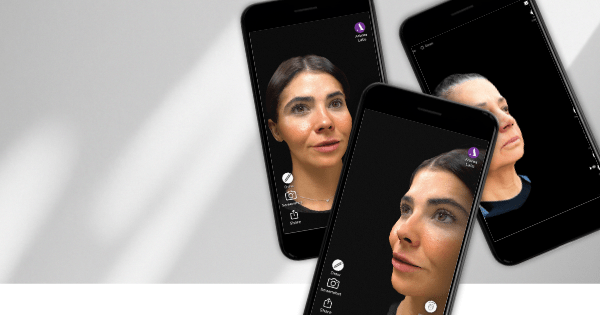
Arbrea Labs is redefining how patients experience surgical consultations by replacing ambiguity with clarity. Through AI-powered, photorealistic 3D simulation, patients can see personalized, anatomically accurate visualizations of potential surgical outcomes before making a decision.
Rather than abstract explanations, surgeons and patients can engage in shared visual understanding.
This shift fundamentally changes the consultation dynamic:
- Patients feel more informed and empowered
- Expectations become realistic and aligned
- Anxiety decreases as uncertainty is reduced
- Trust between patient and surgeon deepens
As many surgeons report, once patients see their potential outcomes, conversations move from fear-based hesitation to confidence-driven decision-making.

What This Means for Patient-Centered Care
Reducing uncertainty is not about overselling outcomes it is about transparent communication. When patients understand possibilities and limitations clearly, they are better prepared emotionally and psychologically for surgery and recovery.
In this sense, visualization is not merely a technological enhancement; it is a clinical communication tool that supports ethical, patient-centered care.
The Future of Surgical Confidence
As healthcare continues to evolve toward personalization, the ability to clearly communicate outcomes will become essential not optional. Patients no longer want reassurance alone; they want evidence they can understand.
By transforming uncertainty into visual clarity, Arbrea Labs is helping surgeons address the root cause of surgical anxiety long before the first incision is made. Because patients don’t fear surgery. They fear the unknown.
Conclusion
Surgical fear is rarely about the procedure itself. In an era of advanced techniques and proven safety standards, what patients struggle with most is uncertainty about outcomes, appearance, recovery, and expectations. When those uncertainties remain unresolved, anxiety fills the gap. By introducing personalized, photorealistic 3D visualization into the consultation process, Arbrea Labs helps transform abstract explanations into concrete understanding. This clarity empowers patients to make informed decisions with confidence and allows surgeons to communicate outcomes with greater precision and transparency.
As medicine continues to shift toward patient-centered care, reducing uncertainty is no longer optional it is essential. The future of surgical confidence lies not only in technical excellence, but in how clearly outcomes are communicated before surgery begins. When patients understand what lies ahead, fear diminishes. And when uncertainty is removed, trust takes its place.
References:
[1] Epstein RM, Street RL Jr. The values and value of patient-centered care. Ann Fam Med.
[2] Waljee J, McGlinn EP, Sears ED, Chung KC. Patient expectations and patient-reported outcomes in surgery: a systematic review. Surgery.





 EN
EN  PT
PT  IT
IT  ES
ES  DE
DE