


Personalization, prediction, and precision are shaping the future of aesthetic medicine. What was once driven by standardized techniques is now evolving into a data-informed, patient-centered discipline. Today’s patients expect more than generic outcomes or abstract explanations they want treatments that reflect their unique anatomy, goals, and lifestyle, supported by transparent communication and advanced visualization.
Over the next decade, aesthetic medicine will redefine how care is planned, communicated, and experienced.
From Standardized Procedures to Personalized Care
Historically, aesthetic medicine relied heavily on population averages and standardized approaches. While clinically effective, these models often struggled to account for individual variation and personal expectations.
Today, personalization represents a fundamental shift. Modern consultations increasingly focus on the individual their anatomy, proportions, and desired outcomes rather than a one-size-fits-all framework. As a result, understanding and alignment have become just as important as technical execution.
Why the Future of Aesthetic Medicine Is Personalized
Personalization begins with clarity. When patients are asked to imagine results based solely on verbal descriptions or flat images, misunderstandings are common. Advanced visualization technologies address this challenge by creating patient-specific representations that are intuitive and spatially accurate.
By visualizing potential outcomes based on individual anatomy, clinicians can:
-
Explore multiple procedural options in real time
-
Tailor discussions to each patient’s goals
-
Reduce ambiguity and misinterpretation
Moreover, this approach aligns naturally with how the human brain processes visual and spatial information, improving comprehension and engagement.
Prediction: Reducing Uncertainty Through Visualization
Prediction is a defining pillar of the future of aesthetic medicine. While outcomes can never be guaranteed, predictive visualization tools help replace guesswork with informed foresight.
Instead of relying solely on verbal reassurance, clinicians can demonstrate likely aesthetic changes using data-driven simulations. Consequently, consultations benefit from:
-
More realistic expectation-setting
-
Clear comparison between treatment options
-
Increased confidence during decision-making
From a cognitive perspective, prediction reduces uncertainty and cognitive load by transforming abstract possibilities into visual, interpretable scenarios.
Precision Beyond Technique
Precision in aesthetic medicine now extends far beyond surgical accuracy. It also shapes how procedures are planned, explained, and understood.
Precision consultations ensure that:
-
Anatomical changes are explained with spatial accuracy
-
Patients understand both benefits and limitations
-
Decisions become collaborative rather than hierarchical
As technology, communication, and clinical expertise align, consultations become clearer, more transparent, and more balanced.
The Cognitive Foundations of This Shift
This evolution is deeply rooted in cognitive science. Research consistently shows that:
-
Visual information is processed faster than text
-
Interactive models improve retention and recall
-
Reducing cognitive overload enhances understanding
Therefore, when consultations align with how the brain naturally interprets information, patients feel more confident, informed, and prepared to engage in their care.
Trust, Confidence, and Shared Decision-Making
As personalization and prediction improve, trust strengthens. Patients who clearly understand their options report greater satisfaction with both the consultation process and the final outcome.
Visualization tools support shared decision-making by:
-
Aligning clinician and patient perspectives
-
Encouraging open, informed dialogue
-
Reducing post-procedure disappointment
Ultimately, this marks a shift from persuasion to partnership — a cornerstone of truly patient care.
What the Next Decade Holds
The future of aesthetic medicine will not be defined solely by new procedures or devices, but by how care is communicated.
Personalization ensures relevance
Prediction builds confidence
Precision enables clarity
Together, these principles redefine the consultation experience and elevate the standard of care.
From Vision to Practice: Arbrea Labs
Arbrea Labs operates at the intersection of personalization, prediction, and precision.
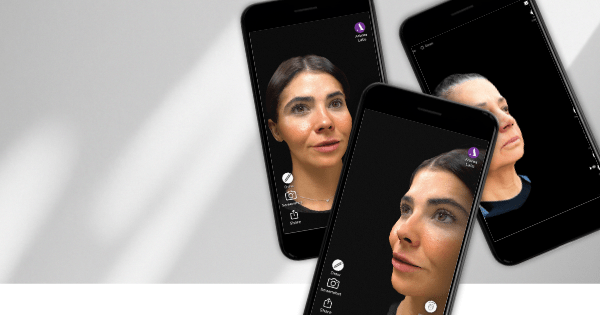
By combining real-time 3D simulation, augmented reality, and visualization, Arbrea enables clinicians to communicate in a way that aligns with how patients naturally understand information visually, spatially, and interactively.
The result is not just better technology, but better conversations:
-
Clearer understanding of anatomical change
-
More realistic expectations
-
Reduced cognitive overload
-
More confident and informed decision-making
As the future of aesthetic medicine continues to unfold, tools grounded in cognitive science and visualization will play a central role. Arbrea Labs is helping shape that future where understanding is visual, decisions are shared, and care is truly personalized.






 EN
EN  PT
PT  IT
IT  ES
ES  DE
DE