


The before-and-after photo had a good run. For three decades it was the workhorse of aesthetic clinic marketing: simple, visual, persuasive. But it was always showing you someone else’s story. Augmented Reality is finally making that obsolete. Walk into most aesthetic clinics today and there’s still a binder somewhere. Or a wall of framed photos. Or a carefully curated Instagram grid full of dramatic transformations. The implicit message is always the same: look at what we did for her, imagine what we could do for you.
That “imagine” is doing a lot of work. And it turns out, patients aren’t very good at it.
The before-and-after photo is a borrowed story. The body in that image isn’t yours. The starting point isn’t yours. The anatomy, the proportions, the age, the skin, none of it is yours. Patients are being asked to perform a kind of mental transplant, overlaying their hopes onto a stranger’s result and making a major financial and physical decision based on how well that projection lands.
That’s a lot of trust to put in someone else’s photos
What AR actually changes in the room
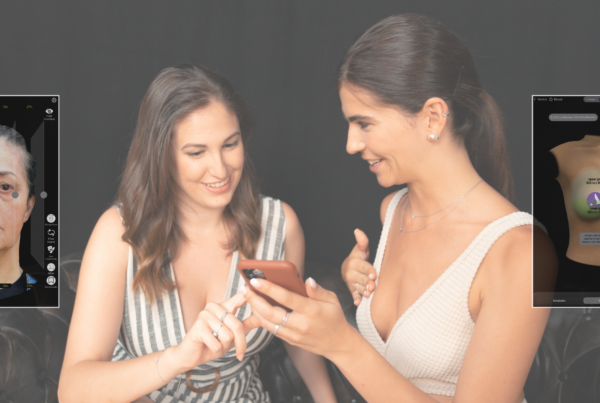
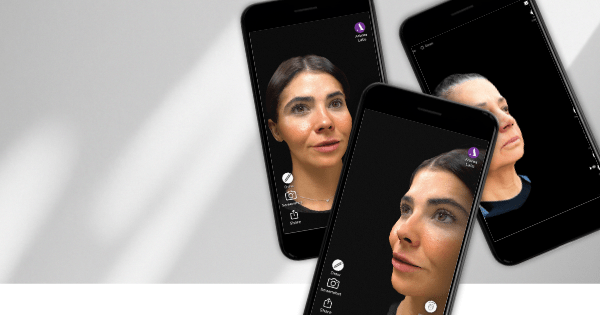
Real-time augmented reality doesn’t ask patients to imagine anything. It shows them. Their faces. Their body. The proposed change live, in motion, from every angle overlaid onto them in real time on a screen or tablet.
The shift this creates in the consultation dynamic is hard to overstate. What was previously an act of persuasion became an act of collaboration. The surgeon isn’t selling an outcome anymore; they’re planning one, together, with the patient looking at themselves in the process. Patients who have experienced this consistently describe the same thing: a feeling of certainty they didn’t have before. Not just confidence in the clinic, but confidence in the decision itself. They’re not leaving the consultation hoping it’ll look right. They’ve already seen it look right.
“The patient isn’t buying a procedure anymore. They’re confirming a decision they’ve already made because they’ve already seen themselves after it.”
From a conversion standpoint, that’s a fundamentally different position to be booking from. The psychological distance between “I think I want this” and “I know I want this” is exactly where most consultation-to-booking drop-off happens. AR collapses that gap in a single appointment.
Why the photo never really worked the way clinics thought
Before-and-after photos are good at generating interest. They work at the top of the funnel on social media, on websites, in advertising because they demonstrate capability and build initial trust. But somewhere along the way, clinics started treating them as a closing tool too. And that’s where they fall short. By the time a patient is sitting in front of you, they already believe you can do good work. That’s why they booked the consultation. What they’re uncertain about isn’t your skill, it’s whether the outcome will be right for them, specifically. A photo of someone else’s rhinoplasty doesn’t answer that question. A simulation of their own nose does.
The commercial case is stronger than most clinics realise
Shorter time from consultation to booking. Higher procedure value per patient because the conversation moves from “whether” to “which” patients who are visually certain about the outcome, are far more willing to consider additional procedures or premium options. Lower revision rates, which means less unpaid chair time eating into margins. And referrals that come pre-sold, because a patient who experienced an AR consultation tends to lead with that when recommending the clinic to someone else.
There’s also a subtler commercial benefit that often goes unmentioned: AR naturally filters for commitment. Patients who go through a simulation and still feel uncertain are telling you something important and it’s better to know that before scheduling a procedure than after completing one. The consultation becomes a quality filter as much as a sales tool. Also real-time AR extends the consultation beyond the physical room. Virtual consultations powered by AR simulation bring the same visual, personalised experience online meaning the decision-making process starts earlier, the first appointment carries more weight, and nothing is wasted on groundwork that could have been done before walking through the door.
How Arbrea Is Making This Real, Right Now
If real-time AR sounds like a future-facing concept, Arbrea Labs is proof it’s already here and already working in consultation rooms. Arbrea built their platform around one practical constraint: it had to work in the room, on the day, without any special setup. No external sensors, no dedicated hardware, no internet required. Just an iPad or iPhone, the patient in front of you, and a simulation running on their actual anatomy in real time.
What this means commercially is that the barrier to adoption is almost entirely removed. Surgeons using Arbrea Breast can show a patient multiple implant profiles, sizes, and placements in a single appointment and watch in real time as the patient’s reaction tells them more than any questionnaire ever could. The same applies to Arbrea Face, which covers rhinoplasty, fillers, facial harmonisation, and Arbrea Body designed to deliver fast, realistic 3D simulations in real time.
The before-and-after photo shows what you’ve done for others. Arbrea shows what you’ll do for them. That’s the shift and it happens in the first fifteen minutes of the consultation.
What this means for how you structure a consultation
If you’re using AR as an add-on something you show patients after you’ve already talked through the procedure you’re underusing it. The most effective approach is to make it the centrepiece of the consultation from the start. Show the simulation early, let the patient react, and let that reaction drive the conversation.
What you’ll find is that patients start asking better questions. More specific ones. Not “will I look natural?” but “can we adjust the profile slightly?” Not “what size implant?” but “which of these two options fits my frame better?” The conversation becomes surgical planning, not sales management.
That shift from convincing to planning is where the real conversion power of AR lives. Patients who feel like they’ve planned their outcome rather than being sold one book with more confidence, show up with lower anxiety, and leave with higher satisfaction. Technology enables all of that. But only if the consultation is structured to let it.
The before-and-after photo isn’t disappearing. But its role is changing from decision driver to proof point. The decision itself is happening in real time now, in the consultation room, on the patient’s own face. Clinics that understand that shift are winning the conversion battle before the patient ever leaves the building.




 EN
EN  PT
PT  IT
IT  ES
ES  DE
DE