

The American Society of Plastic Surgeons has released its 2025 procedural statistics: 1,523,330 cosmetic surgical procedures in the United States, up 7 percent year over year. The headline number is not the interesting part. What the dataset really documents is a change in what patients bring into the consultation — and, in one case, a measurable gap between what they ask about and what they go on to book.
Below are five signals worth reading closely, with the numbers behind them. The data is US-only and claims-and-survey based, so it should be read as direction rather than as a global census. The ISAPS Global Survey remains the reference point for cross-market comparison.
1. The growth is in lifting, not in adding volume
Across the face and body, the procedures that grew are the ones that address skin laxity and restore contour. Facial fat grafting recorded the largest increase of any cosmetic surgical procedure at 39 percent (34,117 cases). Brow lifts rose 29 percent, upper body lifts 22 percent, arm lifts and neck lifts 21 percent each, thigh lifts 20 percent, eyelid surgery 19 percent and facelifts 13 percent.
Meanwhile liposuction, still the highest-volume procedure at 317,196 cases, was flat at −1 percent, and tummy tucks rose only 2 percent. Reduction of fat is stable; management of the envelope that is left behind is what is growing.

Why it matters clinically. Lift procedures are harder to explain than volume procedures. A patient can picture a larger implant; scar position, vector of pull and the trade-off between tightness and scar length are much less intuitive. As the case mix shifts toward lifting, the consultation carries more explanatory load.
2. GLP-1 patients are filling consultation slots faster than operating lists
Eighty-two percent of ASPS member surgeons reported consultation requests related to GLP-1 medications. Broken down by procedure, GLP-1-related consultations were reported for tummy tuck by 88 percent of surgeons, breast surgery by 87 percent, arm lift by 84 percent, thigh lift by 80 percent, panniculectomy by 67 percent and body lift by 62 percent.
Now compare that with volume. Arm lifts and thigh lifts grew roughly in line with the consultation signal, at 21 and 20 percent. Tummy tucks, the single most-discussed procedure, grew 2 percent.
Why it matters clinically. ASPS reads this gap as a pipeline of patients still weighing timing, recovery and cost, and explicitly flags it as worth further study. It is the most operationally relevant finding in the report: for many practices, the constraint in 2025 was not demand generation but the distance between a first consultation and a decision. Post-weight-loss patients are also, by definition, mid-journey — some are still losing, and the honest answer in the room is often “not yet.” That conversation is easier to hold when the patient can see what a lift would and would not change.
3. Face and body have become one conversation
The report tracks the same pattern from the abdomen to the midface. Facial volume loss and soft tissue descent after rapid weight loss — what popular culture calls “Ozempic face” — showed up in consultations for facelift (71 percent of surgeons), neck lift (64 percent), eyelid surgery (37 percent) and brow lift (19 percent).
Autologous fat grafting is now the second most commonly used facial rejuvenation approach at 49 percent, behind hyaluronic acid fillers at 69 percent, and ASPS notes the technique was gaining ground before the GLP-1 surge rather than because of it.
Why it matters clinically. Patients increasingly arrive with a list rather than a complaint: arms, abdomen, breasts and midface in the same appointment. Staging that list — what happens first, what waits, what can be combined — is becoming a core part of the consultation rather than an afterthought.
4. In breast surgery, the brief is proportion
Breast augmentation and implant revision reached 304,234 procedures, up 11 percent. Breast lifts rose 8 percent to 156,131 and breast reductions 7 percent to 76,040. Growth, then — but not toward larger.
Asked which implant sizes they used most, surgeons ranked 300–400 cc first and 200–300 cc second. Thirty-six percent reported patients trending toward smaller implants, 12 percent toward larger, and 52 percent saw no change. Explant volume was essentially flat at 45,773, which suggests the shift comes from new patients entering consultation rather than from existing patients reversing earlier decisions.
Why it matters clinically. “Proportional to my frame” is a harder brief to agree on verbally than a cup size. It is an anatomical judgement about base width, tissue quality and projection — a discussion that benefits from being conducted on the patient’s own body rather than on reference photographs of someone else’s.
5. The patient is older than the narrative suggests
Volume declined 9 percent among patients aged 18–25 and 5 percent among those aged 26–35. It grew 8 percent in the 46–55 group, 15 percent in the 56–65 group and 24 percent among patients aged 66 and older — the largest increase of any age band. In that oldest group, eyelid surgery became the highest-volume procedure and breast augmentation grew 34 percent.
Patients aged 36–55 remain the volume backbone, accounting for roughly 49 percent of all cosmetic procedures.
Why it matters clinically. Growth is coming from patients who have had decades of exposure to surgical outcomes, good and bad, and who tend to arrive with specific, conservative expectations. Seventy-five percent of surveyed surgeons named restoration after life changes — pregnancy, ageing, significant weight loss — as the leading motivation patients described, well ahead of aesthetic enhancement at 67 percent.
What we take from it
Read together, the 2025 numbers describe a consultation that is doing more work than it used to: more anatomical areas per patient, more explanation of procedures whose result is a contour rather than a volume, more patients whose stated goal is restoration and whose reference point is their own earlier self.
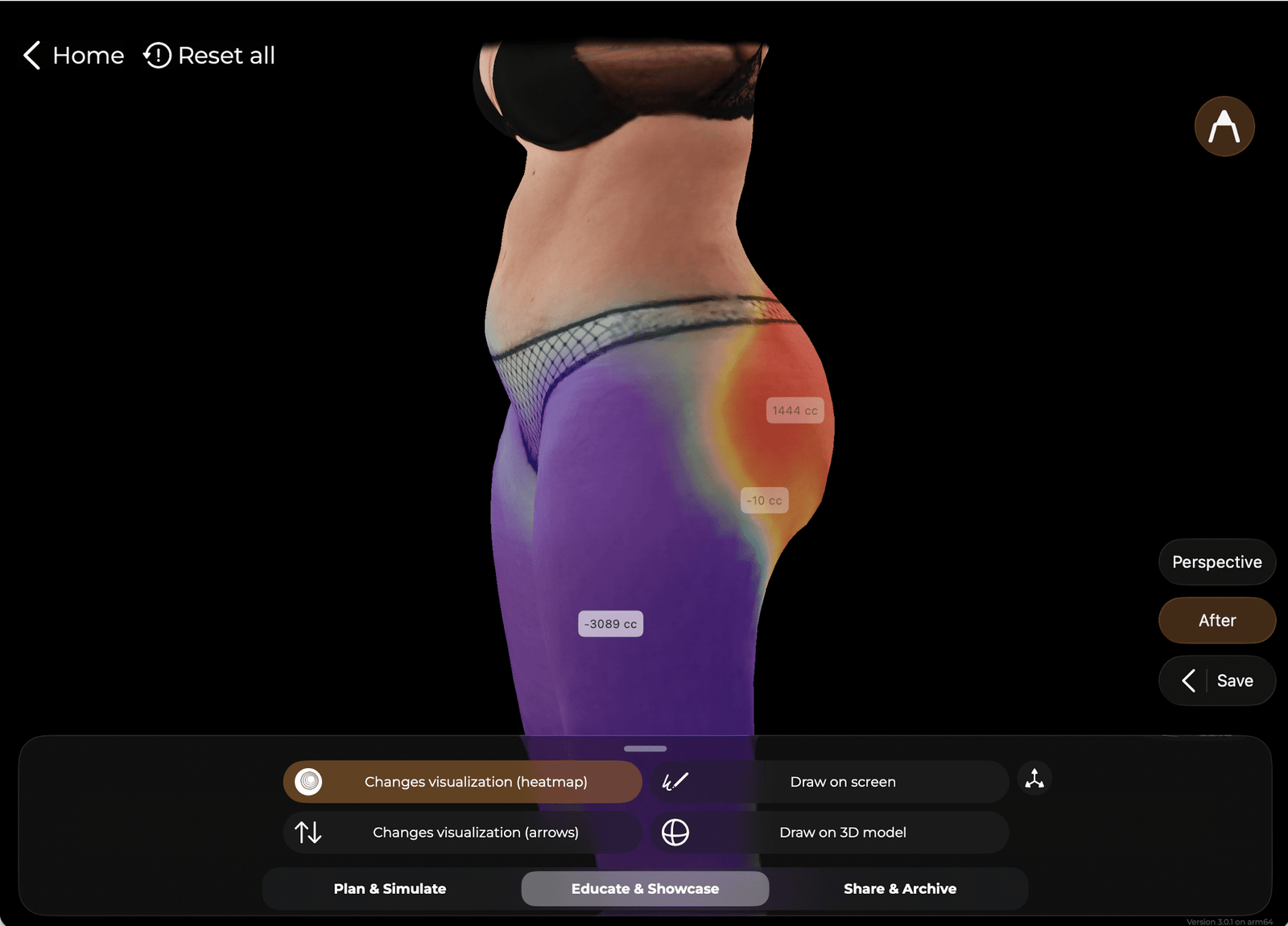
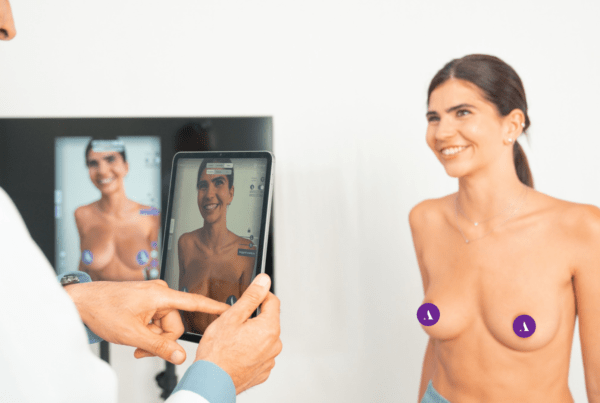
This is the part of the pathway Arbrea Labs works on. Arbrea Suite lets the surgeon simulate breast, face and body outcomes on the patient’s own 3D anatomy during the visit, and myArbrea lets the patient revisit that simulation at home, where most decisions are actually made. Arbrea is currently used by surgeons in more than 60 countries, for aesthetic and reconstructive breast cases alike.
We are not claiming a simulation closes the consultation-to-surgery gap on its own; timing, recovery and cost are real constraints and no software removes them. But outcome uncertainty is the one variable in that list the surgeon can address in the room.
Data source: American Society of Plastic Surgeons, 2025 Procedural Statistics Release. ASPS estimates are based on information from member surgeons, ASPS Endorsed Partner CosmetAssure and a national claims-based dataset representing more than 3,000 US board-certified plastic surgeons, aggregated and statistically extrapolated. Figures are US-only.





 English
  Portuguese
  Italian
  Spanish
  German
  Arabic
  French
  Korean
  Albanian
  Thai
Thai  Hindi
Hindi