

Today marks the start of Pinktober, Breast Cancer Awareness Month. Across the world, pink ribbons remind us of screening, early detection and research. Behind every ribbon is a person, and more than two million women are diagnosed with breast cancer every year.
For many of them, treatment is only the first chapter. After a mastectomy comes another decision: whether to have breast reconstruction, when, and how. It is a medical choice. Above all, it is an emotional one.
Reconstruction is not about vanity. It is about recognising yourself in the mirror again, and feeling at home in a body that has been through so much. That is why we believe every reconstruction journey has to begin with something no scalpel can replace: listening.
Every good surgeon is a psychologist first
Ask experienced plastic surgeons what separates a good outcome from a great one, and many won’t start with technique. They’ll talk about the conversation that happens long before anyone enters the operating room.
Plastic surgery changes the body, but its real purpose is to change how a person feels. So the surgeon’s first job is to understand the mind behind the request: why this patient, why now, and what she hopes will be different afterwards. A technically perfect result can still disappoint if her expectations were never truly understood.
That is why the best consultations feel less like a presentation and more like a careful, caring interview. The surgeon listens for motivation, readiness and pressure from others. They notice when a patient may need emotional support before any procedure. And sometimes the most responsible answer is: not yet.
Nowhere is that truer than in breast reconstruction. A patient in a reconstruction consultation may be carrying fear, grief, fatigue from chemotherapy and a changed relationship with her own body. She may not know what is possible. She may not yet know what she wants.
A surgeon who leads with technique, such as implant types, flap procedures and timelines, risks talking past her. A surgeon who leads with questions builds something more important first: trust.
- What matters most to you?
- What worries you?
- How do you want to feel a year from now?
These questions shape everything that follows. They help the surgeon understand whether the patient is ready to decide, what outcome she actually hopes for, and where her expectations may need gentle, honest adjustment.
Good psychology is not a soft extra in reconstructive surgery. It is the foundation of a good result, and of a patient who feels cared for rather than processed.
In che modo le nuove tecnologie, come Arbrea Suite, influenzano il rilevamento e la gestione dell'ansia preoperatoria?
Le nuove tecnologie, come i simulatori 3D di Suite ArbreaI risultati dei test di screening, che hanno un ruolo chiave nel ridurre l'ansia preoperatoria, sono molto utili. Offrendo una visualizzazione anticipata e realistica dei risultati attesi, aiutano i pazienti a gestire le loro aspettative e a ridurre la paura dell'ignoto. Queste simulazioni consentono ai pazienti di esplorare diverse opzioni e potenziali risultati, dando loro un maggiore controllo sul processo. Nel nostro studio abbiamo notato un miglioramento della comunicazione tra paziente e chirurgo, riducendo le incomprensioni e allineando meglio le aspettative ai possibili risultati. Questo porta a un processo decisionale più informato e a un aumento della soddisfazione post-operatoria.
In quale momento del processo preoperatorio introducete una tecnologia di visualizzazione come Arbrea Suite e come questo influisce sulle aspettative del paziente?
Introduciamo la tecnologia di simulazione 3D durante la prima visita preoperatoria, dopo aver analizzato lo stato di salute, le aspettative e le misure anatomiche del paziente. Spesso i pazienti arrivano con idee preconcette basate su conversazioni con conoscenti o immagini di altri. Utilizzando il simulatore 3D, possono vedere come apparirebbero realmente, evitando di fare paragoni con altre persone. Questo permette loro di prendere decisioni più informate e personalizzate, regolando le loro aspettative in modo realistico e riducendo l'ansia per i risultati dell'intervento.
Quali consigli darebbe ad altri chirurghi sull'integrazione di tecnologie avanzate nella loro pratica quotidiana per migliorare l'esperienza del paziente e ridurre la sua ansia prima dell'intervento?
Consiglio vivamente di integrare le tecnologie di simulazione come strumento fondamentale nella consulenza. I simulatori 3D offrono ai pazienti una visualizzazione realistica dei risultati attesi, aiutandoli ad allineare le loro aspettative con ciò che è realmente possibile. Facilitano una comunicazione chiara e riducono le incomprensioni, assicurando al paziente una comprensione completa della procedura.
È fondamentale fornire opzioni personalizzate; mostrando diversi scenari di esito, i pazienti possono prendere decisioni più informate. Le simulazioni interattive consentono di sperimentare visivamente i cambiamenti prima dell'intervento, il che è molto rassicurante. Inoltre, può essere estremamente utile offrire un'educazione visiva attraverso video e materiali interattivi che spieghino la procedura e il recupero.
Integrando queste tecnologie, non solo miglioriamo la soddisfazione e l'esperienza del paziente, ma rendiamo anche il processo più chiaro e meno stressante. In ultima analisi, ciò contribuisce a ottenere risultati migliori e a rafforzare la fiducia nel rapporto medico-paziente.
Our story: closing the gap between imagining and seeing
For us, Pinktober is personal. Arbrea Labs was founded in 2018 in Zurich, Switzerland, by our CEO Endri Dibra, and its story began at home. When a close family member was diagnosed with breast cancer, Endri saw up close how much uncertainty a diagnosis brings, and how many difficult decisions follow it. He wanted to use technology to help women face those decisions with more clarity and confidence.
That experience led to a simple observation: in reconstructive and aesthetic consultations, the surgeon can picture the possible result, but the patient usually cannot.
Words, sketches and before-and-after photos of other people only go so far. They leave the patient to imagine her own body, and imagination is shaped by hope and fear in equal measure. That gap is where anxiety, unrealistic expectations and regret can grow.
How 3D simulation supports the reconstruction conversation
Simulation does not replace the surgeon’s empathy. It gives that empathy something concrete to work with.
In a reconstruction consultation, Arbrea Breast can help in four ways:
Making options tangible
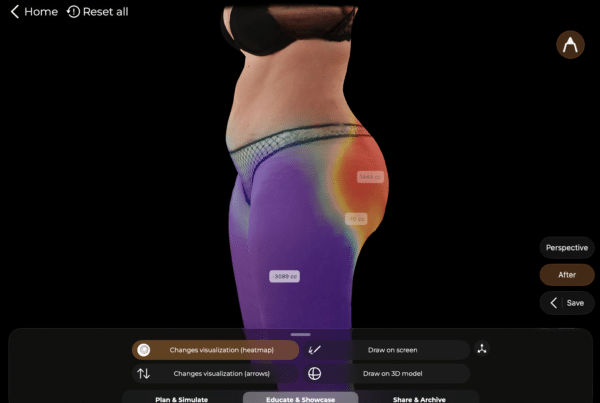
Instead of describing volume, shape and symmetry in abstract terms, the surgeon can show [the reconstruction scenarios Arbrea Breast supports] on a 3D model of the patient’s own body.
Giving back a sense of control
After a diagnosis that often feels like losing control, exploring options visually and at her own pace lets the patient take an active part in decisions about her body.
Setting honest expectations
A realistic visual makes it easier to discuss what reconstruction can and cannot achieve before surgery, not after.
Supporting decisions at home
With the myArbrea app, patients can revisit their simulations, share them with a partner or family member, and come back to the next appointment with clearer questions.
Used this way, simulation becomes part of a psychologist-first mindset: a way to listen, reflect back and build trust, not a sales tool.
This Pinktober
Awareness months rightly focus on screening and early detection. We would like to add one more thing to the conversation: what comes dopo, and how we can make those decisions feel less lonely for every woman facing them.
The only way to simulate reconstruction well is with the surgeons who perform it. Share your cases and experience, and help make every simulation closer to what patients will really see.





 English
  Portuguese
  Italian
  Spanish
  German
  Arabic
  French
  Korean
  Albanian
  Thai
Thai  Hindi
Hindi  Vietnamese
  Japanese