


Today marks the start of Pinktober, Breast Cancer Awareness Month. Across the world, pink ribbons remind us of screening, early detection and research. Behind every ribbon is a person, and more than two million women are diagnosed with breast cancer every year.
For many of them, treatment is only the first chapter. After a mastectomy comes another decision: whether to have breast reconstruction, when, and how. It is a medical choice. Above all, it is an emotional one.
Reconstruction is not about vanity. It is about recognising yourself in the mirror again, and feeling at home in a body that has been through so much. That is why we believe every reconstruction journey has to begin with something no scalpel can replace: listening.
Every good surgeon is a psychologist first
Ask experienced plastic surgeons what separates a good outcome from a great one, and many won’t start with technique. They’ll talk about the conversation that happens long before anyone enters the operating room.
Plastic surgery changes the body, but its real purpose is to change how a person feels. So the surgeon’s first job is to understand the mind behind the request: why this patient, why now, and what she hopes will be different afterwards. A technically perfect result can still disappoint if her expectations were never truly understood.
That is why the best consultations feel less like a presentation and more like a careful, caring interview. The surgeon listens for motivation, readiness and pressure from others. They notice when a patient may need emotional support before any procedure. And sometimes the most responsible answer is: not yet.
Nowhere is that truer than in breast reconstruction. A patient in a reconstruction consultation may be carrying fear, grief, fatigue from chemotherapy and a changed relationship with her own body. She may not know what is possible. She may not yet know what she wants.
A surgeon who leads with technique, such as implant types, flap procedures and timelines, risks talking past her. A surgeon who leads with questions builds something more important first: trust.
- What matters most to you?
- What worries you?
- How do you want to feel a year from now?
These questions shape everything that follows. They help the surgeon understand whether the patient is ready to decide, what outcome she actually hopes for, and where her expectations may need gentle, honest adjustment.
Good psychology is not a soft extra in reconstructive surgery. It is the foundation of a good result, and of a patient who feels cared for rather than processed.
आर्ब्रिया सूट (Arbrea Suite) जैसी नई प्रौद्योगिकियां, प्रीऑपरेटिव चिंता (सर्जरी से पहले की घबराहट) के पता लगाने और प्रबंधन को कैसे प्रभावित करती हैं?
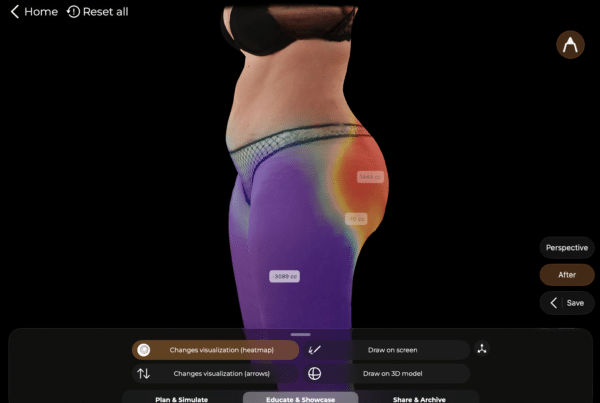
नई तकनीकें, जैसे कि इसके 3डी सिम्युलेटर Arbrea Suite, प्रीऑपरेटिव (शल्यचिकित्सा पूर्व) चिंता को कम करने में एक महत्वपूर्ण भूमिका निभाते हैं। अपेक्षित परिणामों का एक अनुमानित और यथार्थवादी विजुअलाइजेशन प्रदान करके, वे रोगियों को उनकी अपेक्षाओं को प्रबंधित करने और अज्ञात के भय को कम करने में मदद करते हैं। ये सिमुलेशन रोगियों को विभिन्न विकल्पों और संभावित परिणामों का पता लगाने की अनुमति देते हैं, जिससे उन्हें इस प्रक्रिया पर अधिक नियंत्रण मिलता है। हमारे अभ्यास में, हमने रोगी और सर्जन के बीच संचार में सुधार देखा है, जिससे गलतफहमियां कम होती हैं और संभावित परिणामों के साथ अपेक्षाएं बेहतर ढंग से मेल खाती हैं। इससे अधिक सूचित निर्णय लेने और पोस्टऑपरेटिव (शल्यचिकित्सा पश्चात) संतुष्टि में वृद्धि होती है।.
प्रीऑपरेटिव (शल्यपूर्व) प्रक्रिया में आप अर्ब्रिया सुइट (Arbrea Suite) जैसी विज़ुअलाइज़ेशन तकनीक को किस चरण में पेश करते हैं, और यह रोगी की अपेक्षाओं को कैसे प्रभावित करता है?
हम मरीज के स्वास्थ्य, अपेक्षाओं और शारीरिक माप का विश्लेषण करने के बाद, पहले प्रीओपरेटिव विज़िट के दौरान 3D सिमुलेशन तकनीक पेश करते हैं। अक्सर, मरीज परिचितों के साथ बातचीत या दूसरों की छवियों के आधार पर पहले से बनी धारणाओं के साथ आते हैं। 3D सिम्युलेटर का उपयोग करके, वे देख सकते हैं कि वे वास्तव में कैसे दिखेंगे, जिससे अन्य लोगों के साथ तुलना से बचा जा सके। इससे उन्हें सर्जरी के परिणामों के बारे में चिंता कम करते हुए और अपनी अपेक्षाओं को यथार्थवादी रूप से समायोजित करते हुए अधिक सूचित और व्यक्तिगत निर्णय लेने की अनुमति मिलती है।.
रोगी के अनुभव को बेहतर बनाने और सर्जरी से पहले उनकी चिंता को कम करने के लिए अपनी दैनिक प्रैक्टिस में उन्नत तकनीकों को शामिल करने के बारे में आप अन्य सर्जनों को क्या सलाह देंगे?
मैं परामर्श में एक मूलभूत उपकरण के रूप में सिमुलेशन तकनीकों को एकीकृत करने की पुरजोर अनुशंसा करूंगा। 3D सिमुलेटर रोगियों को अपेक्षित परिणामों का एक यथार्थवादी दृश्य प्रदान करते हैं, जो उनकी अपेक्षाओं को वास्तविक रूप से जो संभव है, उसके साथ संरेखित करने में मदद करता है। वे स्पष्ट संचार की सुविधा प्रदान करते हैं और गलतफहमी को कम करते हैं, जिससे यह सुनिश्चित होता है कि रोगी को प्रक्रिया की पूरी समझ हो।.
व्यक्तिगत विकल्प प्रदान करना अत्यंत महत्वपूर्ण है; विभिन्न परिणाम परिदृश्यों को दिखाकर, मरीज़ अधिक जानकारीपूर्ण निर्णय ले सकते हैं। इंटरैक्टिव सिमुलेशन उन्हें सर्जरी से पहले बदलावों का दृश्य अनुभव करने की अनुमति देता है, जो बहुत आश्वस्त करने वाला होता है। इसके अलावा, वीडियो और इंटरैक्टिव सामग्रियों के माध्यम से दृश्य शिक्षा प्रदान करना, जो प्रक्रिया और रिकवरी को समझाते हैं, बेहद मददगार हो सकता है।.
इन तकनीकों को एकीकृत करके, हम न केवल रोगी की संतुष्टि और अनुभव में सुधार करते हैं बल्कि प्रक्रिया को अधिक स्पष्ट और कम तनावपूर्ण भी बनाते हैं। अंततः, यह अधिक सफल परिणामों और डॉक्टर-रोगी संबंधों में अधिक विश्वास में योगदान देता है।.
Our story: closing the gap between imagining and seeing
For us, Pinktober is personal. Arbrea Labs was founded in 2018 in Zurich, Switzerland, by our CEO Endri Dibra, and its story began at home. When a close family member was diagnosed with breast cancer, Endri saw up close how much uncertainty a diagnosis brings, and how many difficult decisions follow it. He wanted to use technology to help women face those decisions with more clarity and confidence.
That experience led to a simple observation: in reconstructive and aesthetic consultations, the surgeon can picture the possible result, but the patient usually cannot.
Words, sketches and before-and-after photos of other people only go so far. They leave the patient to imagine her own body, and imagination is shaped by hope and fear in equal measure. That gap is where anxiety, unrealistic expectations and regret can grow.
How 3D simulation supports the reconstruction conversation
Simulation does not replace the surgeon’s empathy. It gives that empathy something concrete to work with.
In a reconstruction consultation, Arbrea Breast can help in four ways:
Making options tangible
Instead of describing volume, shape and symmetry in abstract terms, the surgeon can show [the reconstruction scenarios Arbrea Breast supports] on a 3D model of the patient’s own body.
Giving back a sense of control
After a diagnosis that often feels like losing control, exploring options visually and at her own pace lets the patient take an active part in decisions about her body.
Setting honest expectations
A realistic visual makes it easier to discuss what reconstruction can and cannot achieve before surgery, not after.
Supporting decisions at home
With the myArbrea app, patients can revisit their simulations, share them with a partner or family member, and come back to the next appointment with clearer questions.
Used this way, simulation becomes part of a psychologist-first mindset: a way to listen, reflect back and build trust, not a sales tool.
This Pinktober
Awareness months rightly focus on screening and early detection. We would like to add one more thing to the conversation: what comes बाद में, and how we can make those decisions feel less lonely for every woman facing them.
The only way to simulate reconstruction well is with the surgeons who perform it. Share your cases and experience, and help make every simulation closer to what patients will really see.





 English
  Portuguese
  Italian
  Spanish
  German
  Arabic
  French
  Korean
  Albanian
  Thai
Thai  Hindi
Hindi  Vietnamese
  Japanese