

A philosopher on social media, desire, and the patient who no longer sees the risk.
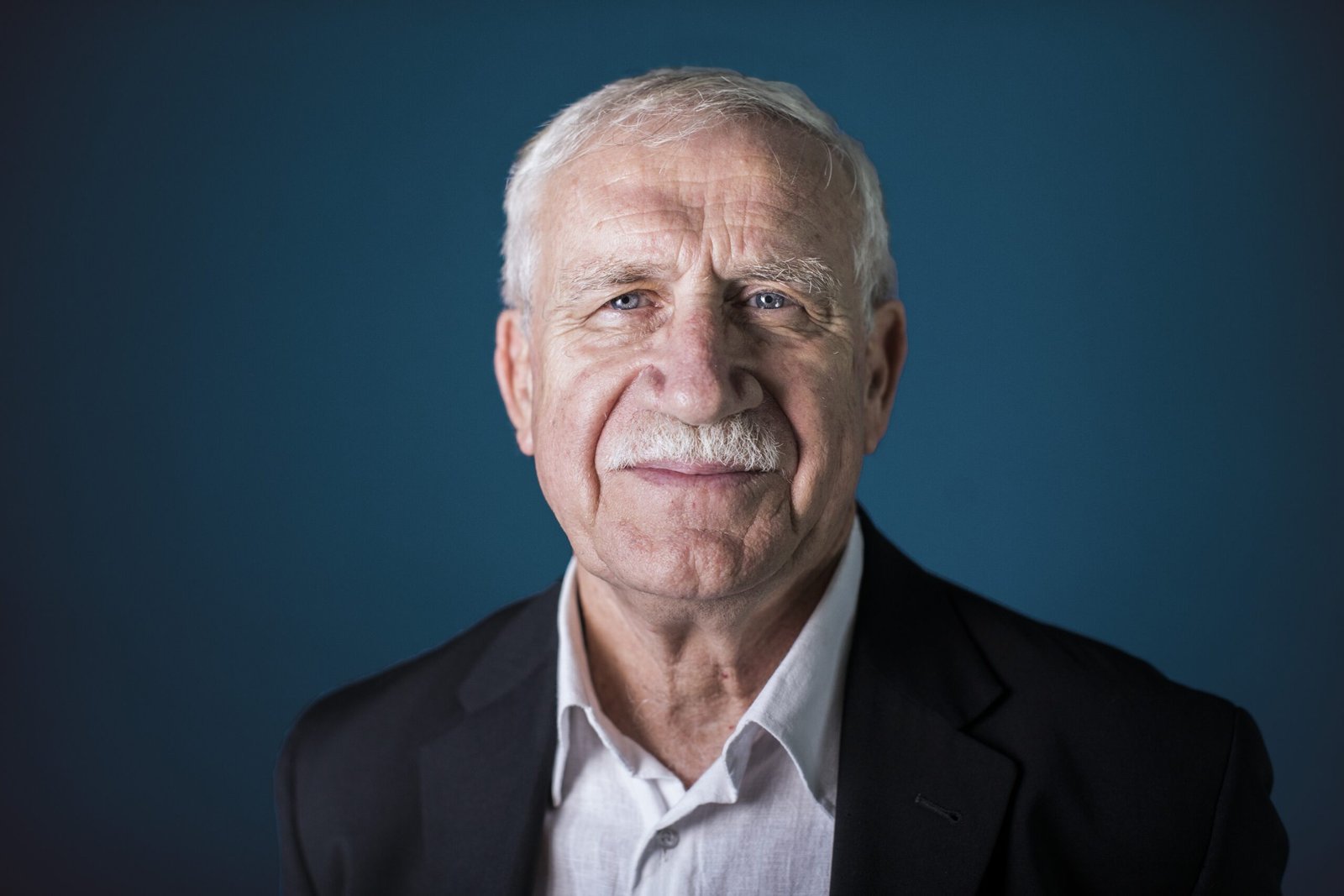
An interview with Prof. Maurizio Iacono, philosopher, University of Pisa.
Patients arrive with a filtered image of themselves, an expectation of speed, and little sense of what surgery actually involves. Surgeons see it daily. But the language for describing it usually comes from marketing.
So we asked a philosopher instead.
People want to look in real life the way they look on Instagram. What is actually happening there?
This is one of the great questions of our time — what I call the loss of the frame. It is the life of fiction prevailing over real life.
I don’t believe fiction is pure invention and the real is pure truth; the matter is infinitely more complex. “Fiction” comes from fingo, which means to shape, to construct. Fiction is not a lie. It becomes one when it no longer presents itself as fiction, when there is no frame through which a person can tell the difference. We live in an age in which the frames are loosening. People no longer notice when they are watching a fiction, a story, and when they are living it.
We are all becoming spectators, which means being isolated in the dark, as in a cinema. This produces what sociologists call connected isolation: the more connected we are, the more alone we are.
And how long can that self-deception hold?
It lasts as long as a life lasts.
We are immersed in a society that denies the passages of life. We are adolescents until forty; after forty we are, perhaps, young. We are rather pathetically shifting the dimensions of life toward a kind of self-deception of youth — maturity at best. We are afraid to say that someone is old; other words are used, because the word is experienced as negative. I would point out that in past eras being old was a mark of wisdom, not of obsolescence.
This denial of life’s passages produces a condition in which we are no longer educated in the relationship between past, present and future. Everything becomes a present that appears to renew itself and in fact repeats itself. And living in an eternal present creates the need to deny the transformations of one’s own body. The transformative capacities of surgery offer an easy route to resolving the gap between the real and the fictional.
The illusion of eternal youth is an enormous advantage, but it risks becoming a problem — and I say this calmly. There is a kind of delirium of omnipotence in which you must always appear young. And there is a second aspect, also related to time: today you are educated, wrongly, to satisfy every need immediately.
All of this works and makes sense because we live in a market society, where the power of desire takes the place of the satisfaction of need. You don’t choose an object because you need it — need is the substrate — but the real game is aesthetic, and tied to desire. The point is that desires cannot be satisfied; needs can. If the myth is I want to be powerful enough to satisfy desire, and I want to do it quickly, that is a tragedy, because the impact of the reality principle wounds this narcissism, which unfortunately is very widespread today.
Surgeons tell us their patients now arrive with no real sense of risk, pain or recovery — only the before-and-after grid. Call it the trivialization of the scalpel.
This is precisely the reality principle arriving with violence.
Today’s aesthetic model is determined by the market — determined by the fact that a commodity has to present itself as beautiful, attractive, intriguing. When you buy butter you look at where it came from, at the price, of course; but what really counts is how it is wrapped and which colors are used. That is the aesthetic game tied to desire. It is the commodity fetish, and today it extends to bodies as well.
A commodity has a particular characteristic: it comes on stage. It is an actress. It has to show itself, provoke you, give you desire, or you won’t sell it. Nobody knows where it was made, who made it, what work went into it, what actually happened. You take the commodity finished and beautiful, you buy it and you leave. The cooperative element is hidden behind the spectacular one. Aesthetics, in this sense, becomes an instrument of concealment — and I don’t mean by that that beauty isn’t necessary in life. Quite the opposite.
There is another factor here, again tied to the society of desire in which aesthetics has absolute dominion: it proposes one precise model of the body — thin, young. That is a historically determined aesthetic, not an eternal one. Until forty or fifty years ago the thin woman was not considered erotic; wrinkles and the marks of maturity carried a completely different meaning from the one assigned to them now. Much of this comes from a culture of aesthetics, from the idea that we must stop time. And not only stop it, but stop it at a certain age — which is funny, and a dominant stereotype.
You have written about “intermediate worlds.” Is social media one of them?
Intermediate worlds — now applied in fields such as cognitive neurorehabilitation and childhood education — are relations with a very strong symbolic power, and they arise not only between human beings but between higher mammals. Through these relations, worlds are constructed, and they may well be fictitious. Play is an example: a world you build fictitiously.
Play is fundamental for children because it trains them to enter and leave contexts, to move in and out of frames. When a little girl plays at being a mother with her doll, she knows perfectly well that she doesn’t have a newborn but a doll; she knows she isn’t the mother but the representation of the mother. She is entirely aware of the game. It is that awareness which gives her mastery of the context, because at a certain point she steps out of it and knows perfectly well that she is the child she is. The child playing soldier is the same. Play trains us in this awareness.
In social media, this awareness of crossing frames is lost. It is as if we were in a great film in the dark, and at a certain moment the film slowly turns into Plato’s cave. In the cave are those who have forgotten, or never seen, other worlds, and who believe that this one is the real world. The comparative capacity with the other world no longer exists.
If you live it that way, you lose the corner of your eye — the ability to live reality and fiction at the same time. Take a horror film: when you are frightened, what do you do? You turn your head and look at the seats. You remind yourself that there is a context, a frame. The problem is not having a life on Instagram and a real life. The problem is losing the boundaries.
Take the theater. I buy a ticket, I wait for the lights to go down three times, because I have made a pact with the director and the actors, and the pact is conscious. It is an act of truth: that you, the spectator, are suspending — as Coleridge says — disbelief, temporarily and knowingly. Or as Bateson put it: “Without context, there is no meaning.”

“Fiction is not a lie. It becomes one when it no longer presents itself as fiction, when there is no frame through which a person can tell the difference.”
Prof. Maurizio IaconoPhilosopher, University of Pisa
A profile is really just a way of narrating yourself. And at some point we start believing the narration.
That is absolutely true, but it opens a problem: is it real narration? What is narration?
One could open a long discussion here, because narration is not the narcissistic satisfaction of exhibiting one’s own ego. If anything, it is the exact opposite. When I put my ego into play in narration, I bring it into a temporality that is not the immediate. So perhaps you are right: the real question is to reopen the discussion about narration.
Narration means using a language — photographic, written, spoken — that has a time and has rules; that has a grammar and a syntax. Being mortal, our life is a continuous interplay between constraints, norms, laws and movement. If I have to construct a narration, including one of my own self, I have to construct it in time: it must have a past, a present and a future.
When Heraclitus says “I have searched myself,” he means that I have retraced myself; and in retracing my life, including by narrating it, I have found something that is different from me — because I have performed the operation of thinking that the other-than-me, my double, is other, is an alterity. If you do not make that wound of alterity against which you measure yourself, you end up either recognizing only the ghost of your own ego, or spilling into madness.
Why is there such a widespread inability to write today? I don’t think it depends on schools. It is the inability to wait, and to bind thought to syntax. Not knowing how to handle syntax is a mental fact: language is time, and it is built on constraints. Creativity has to have constraints within which to develop. Imagination has to have rules, otherwise it becomes madness, delirium — it enters the pathological. What distinguishes imagination from delirium? Precisely the sense of the boundary.
I would insist on this problem of narration, because today we ought to fight hard to defend it. It isn’t true that narration has disappeared. It is that these new social forms of narration ought to imply an education in the narrative element. Exposing the ego continuously to itself is a form of uncontrolled narcissism.
What changes when the reference point is no longer a mirror, but an altered image?
There is a problem: altered images make you forget the body. The more the images show you the body, the more that body becomes imaginatively substitutive of the real body — a body that breathes, that sweats, that lives.
This can even end in perversion, because you can come to prefer bodies that are totally transformed. Think of manga in the pornographic register. Manga, though stylized, allows erotic expressive intensities that exceed the limits of any corporeality, while still representing bodily activity. The body is a metabolic body: it lives, breathes, smells. It is something completely different from these clean, glossy, perfect models. This is a form of fetishism, and fetishism is nothing other than a substitution. You come to prefer the fiction, and to wish that your body would conform to that model. It is a representation of the body that takes the place of the body itself.
Second, there is a problem of images. Images are always historically determined and can be read through the society that produces them. In poor societies fat was beautiful and roundness was marvelous; in rich societies fat is something to be rejected, a sign of poverty. Think of fashion models — the French call them mannequins, which carries a rather strong meaning. The body becomes a means for carrying clothes, not the other way around. There is an inversion of means and ends: clothes no longer enhance the body, the body enhances the clothes. And today thinness, this absolute stylization, requires a very strong exercise of the will.
Demand for labiaplasty has surged worldwide. Why, in a society supposedly free of sexual taboos, are so many people embarrassed by how their own bodies look?
It is a form of conformist homogenization. The pornographic model has become the place of learning for young women and young men. My question is: what becomes of eroticism? I wouldn’t say it is the principle of the voyeur, but it is close. You have to see — and then corporeality no longer matters. It is an excess of the model of appearance.
And there are contradictions, because erectile dysfunction, for instance, is extremely widespread, at vast levels. On one side there is the man’s desire for an enormous penis; on the other, this condition that seems to affect every generation. One ought to ask what kind of eroticism is at work here. A good sexual encounter is an encounter of fusion, in which people receive one another. It is not two strangers performing a mechanical operation. Mechanicality is not an erotic dimension, it is a performative one. And that brings a whole series of problems with it: not measuring up, having to conform — a whole series of serious problems.
Aesthetic surgery and philosophy met today, perhaps for the first time. Was it necessary?
It was necessary, because historical, social and cultural phenomena of this kind have to be confronted. It is not conceivable that we philosophers concern ourselves with bioethics and not with aesthetic surgery.
Was it enough?
It was not enough. Absolutely not.
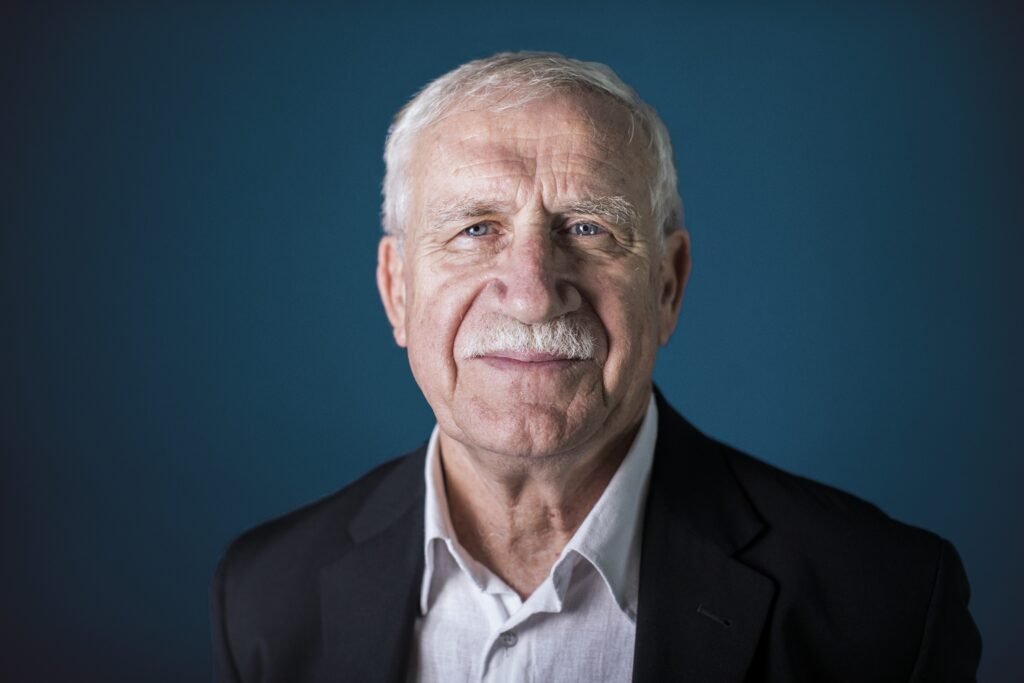
About Prof. Maurizio Iacono
Alfonso Maurizio Iacono is an Italian philosopher and Professor of History of Philosophy à la University of Pisa. Much of his work concerns fetishism and the mechanisms by which a representation comes to stand in for the thing it represents — a question he has pursued across the history of philosophy, anthropology and social theory. He is also known for his notion of “intermediate worlds”: the symbolically charged relations through which we build shared, and sometimes fictitious, realities. His writing on autonomy, spectatorship and the loss of context has found application in fields as varied as cognitive rehabilitation and education.






 English
  Portuguese
  Italian
  Spanish
  German
  Arabic
  French
  Korean
  Albanian
  Thai
Thai  Hindi
Hindi