
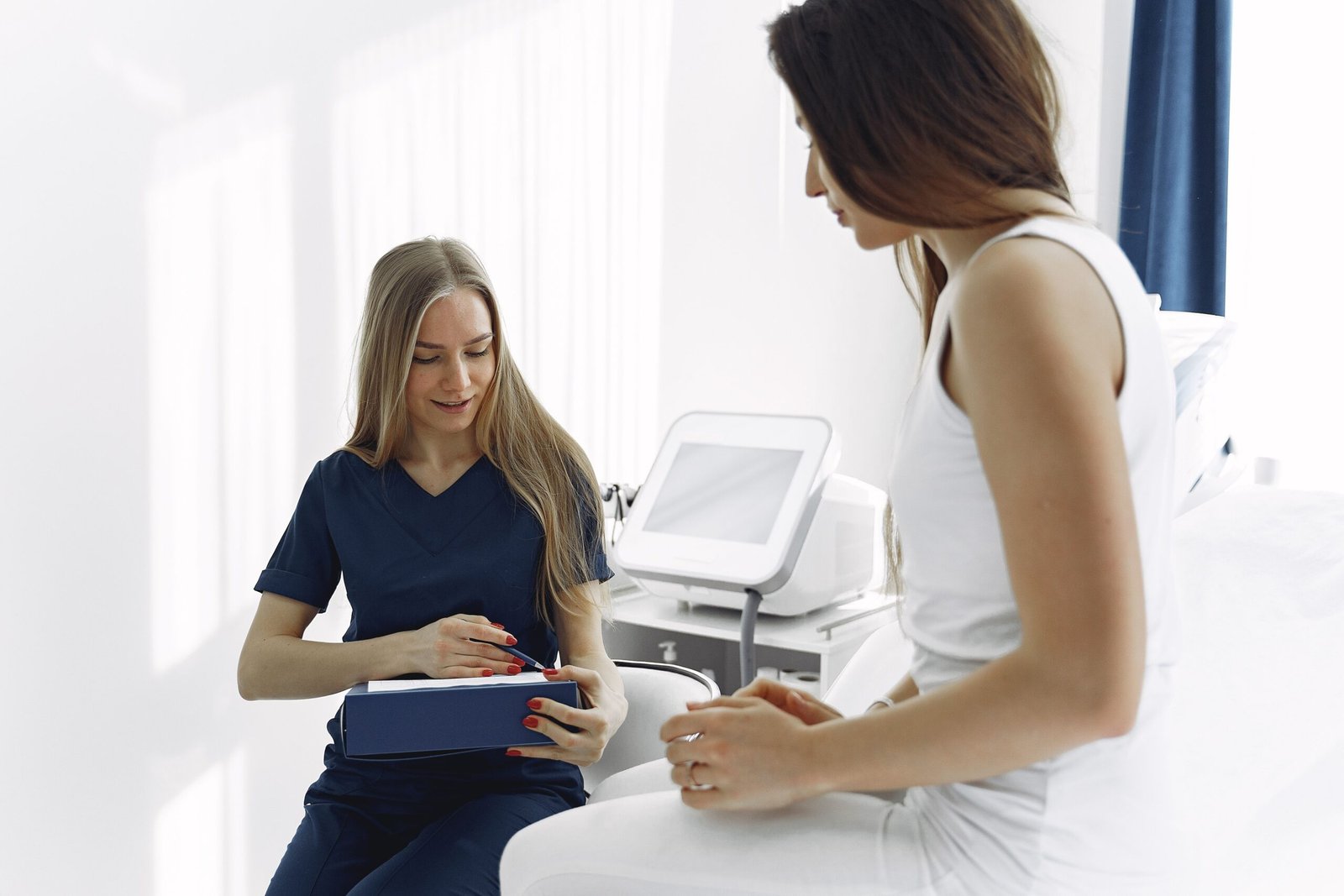
A breast consultation is a conversation about proportion. A facial consultation is a conversation about identity. A body consultation is a conversation about history. Pregnancy, weight change, or years living in a body that never quite matched how someone felt inside, all of it shapes the conversation. Treat all three consultations the same way, and something gets lost.
At Arbrea Labs, his idea drives how we built Seno di Arbrea, Arbrea Viso, e Corpo Arbrea We designed one connected ecosystem, not three separate tools. Each product uses the same simulation rigor, but tailors it to how patients actually decide.
Breast: Proportion
Seno consultations move around a fairly contained set of variables: volume, projection, symmetry, and how a result sits against shoulder width and torso length. Patients arrive with a reference in mind. Simulation turns that reference into something anatomically real for their own frame. The conversation shifts from an abstract size to a shared, visual understanding of proportion — the level of precision trusted by surgeons around the world.
Face: Identity
Facial consultations carry more emotional weight. Patients aren’t just asking “will this look good” they’re asking “will this still look like me.” Arbrea Viso preserves the bone structure and expression that make someone recognizable to themselves. It never smooths toward a generic template. Every adjustment to profile and balance anchors to the patient’s own anatomy the same standard of accuracy relied on by surgeons across the globe.
Body: Where the Real Complexity Lives
This is the consultation with the most riding on it, and the one simulation has the hardest job supporting.
Patients don’t walk in asking for measurements, they walk in with a silhouette in mind: a waistline, a smoother hip-to-thigh line, a flatter profile in clothes they already own. So Corpo Arbrea simulates at the level of contour and shape, not isolated fat or skin removal, because that’s the level patients are actually deciding at.
Body results also have to hold up somewhere a face or breast result rarely gets tested: in motion, sitting down, in real clothing, not just a static photo. That’s why Arbrea Body works across multiple angles and models tissue behavior realistically, so the shape a patient agrees to still makes sense outside the consultation room.
And body consultations are rarely single-procedure. Liposuction plus skin tightening, contouring plus fat transfer, Corpo Arbrea represents the combined plan, not a simplified version of it, so consent is based on what’s actually happening.
Something more emotional sits underneath all of this. Most body patients have already tried diet, exercise, and time. This consultation likely isn’t their first attempt. That history lowers their tolerance for a result that reads as “close but not quite.” It raises the value of a simulation that feels trustworthy rather than aspirational. Arbrea Body doesn’t sell a possibility — it confirms a plan the patient can actually believe in, so they decide based on what the outcome will really look like, not on hope.
Surgical vs. Non-Surgical, Across All Three
A second question layers on top: surgical or non-surgical. This calculation weighs recovery, permanence, and reversibility, not just outcome. For instance, a patient weighing filler against an implant decides how much change they want to commit to, not just what that change looks like. The same holds for someone comparing a non-invasive body device against surgical liposuction. Either way, the same simulation logic applies: it shows a surgical result and frames a non-surgical one just as honestly, instead of favoring whichever option has the better marketing photos.
One Patient, Three Conversations
Few patients are single-procedure prospects for long. Someone considering body contouring today may be curious about facial rejuvenation down the line; a breast patient may return years later asking about body work after a pregnancy. What connects Seno di Arbrea, Il volto, e Corpo isn’t just shared infrastructure it’s a shared standard, so trust built in one consultation carries into the next, whichever conversation a patient is having next.




 EN
EN  PT
PT  IT
IT  ES
ES  DE
DE